
Writing a Mahatma Gandhi essay helps you understand the life of one of the greatest leaders in Indian history. Mahatma Gandhi was a freedom fighter, social reformer, and a strong supporter of truth and non-violence. His simple lifestyle and powerful ideas inspired millions of people during India’s struggle for independence.
Born as Mohandas Karamchand Gandhi, he became a symbol of peace, courage, and justice. His methods of Satyagraha and Ahimsa showed the world that peaceful resistance could challenge unfair systems. Gandhi’s contribution was not limited to politics; he also worked for equality, cleanliness, education, and self-reliance.
His journey teaches important lessons about honesty, patience, and standing against injustice. Even today, his thoughts continue to guide people across the world.
Mahatma Gandhi Essay in 100 Words
Mahatma Gandhi was a great leader who played an important role in India’s freedom struggle. He was born on 2 October 1869 in Porbandar, Gujarat. His full name was Mohandas Karamchand Gandhi. He believed in truth and non-violence throughout his life.
Gandhi led many movements against British rule, including the Non-Cooperation Movement, Civil Disobedience Movement, and Quit India Movement. His idea of Satyagraha encouraged people to fight injustice through peaceful methods.
He supported equality, simple living, and self-reliance. His teachings inspired people around the world. Mahatma Gandhi is remembered as a symbol of peace and courage.
Mahatma Gandhi Essay in 250 Words
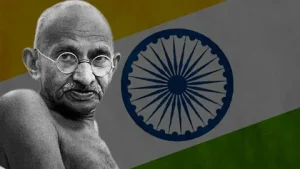
Mahatma Gandhi was one of the most important leaders of India’s independence movement. He was born on 2 October 1869 in Porbandar, Gujarat. From childhood, he learned the value of honesty, discipline, and kindness. These qualities later became the foundation of his life.
Gandhi studied law in London and worked as a lawyer. His experience in South Africa changed his perspective when he faced discrimination. Instead of responding with anger, he chose peaceful resistance. This gave birth to his famous principle of Satyagraha.
After returning to India, Gandhi became involved in the freedom struggle. He supported farmers, workers, and ordinary citizens. Movements like Champaran Satyagraha, Non-Cooperation Movement, and Civil Disobedience Movement showed his leadership skills.
One of his most famous protests was the Salt March in 1930. Through this movement, he opposed the British salt tax and encouraged people to support independence. Later, the Quit India Movement became another major step toward freedom.
Gandhi believed that true change comes through truth and non-violence. His ideas about peace, equality, and social reform continue to inspire people. His life shows that strong values and determination can create a lasting impact.
Early Life of Mahatma Gandhi
Mahatma Gandhi was born into a simple family in Gujarat. His father, Karamchand Gandhi, worked as a government official, and his mother, Putlibai, was known for her religious and caring nature. The values he learned at home shaped his personality.
As a young boy, Gandhi was quiet and focused. He believed in following the right path even when facing difficulties. His interest in honesty and moral values became stronger as he grew older.
After completing his studies, Gandhi went to London to study law. He returned as a lawyer and later went to South Africa for professional work. This period became a turning point because he witnessed unfair treatment and discrimination.
His experiences in South Africa helped him understand the power of peaceful protest. He started working for justice and developed ideas that later became important parts of India’s freedom movement.
Mahatma Gandhi’s Role in India’s Freedom Struggle
Gandhi returned to India in 1915 and soon became a major leader of the independence movement. He believed that common people should also take part in the fight against British rule.
Instead of encouraging violence, Gandhi promoted peaceful movements. His approach brought farmers, workers, students, and citizens together.
Champaran Satyagraha
The Champaran movement was one of Gandhi’s first major successes in India. He supported farmers who were forced to grow indigo under unfair conditions. Through peaceful protest, he helped farmers receive justice.
Non-Cooperation Movement
The Non-Cooperation Movement encouraged Indians to reject British institutions and goods. People started supporting local products and refusing cooperation with colonial systems.
Civil Disobedience Movement
The Civil Disobedience Movement became famous because of the Salt March. Gandhi walked from Sabarmati Ashram to Dandi to protest against the salt tax. This peaceful action gained national attention.
Quit India Movement
In 1942, Gandhi launched the Quit India Movement with the demand for complete independence. The movement played an important role in the final phase of India’s freedom struggle.
Principles and Philosophy of Mahatma Gandhi
Gandhi’s philosophy was based on strong moral values. His teachings were simple but powerful.
Truth (Satya)
Gandhi believed that truth should guide every action. He considered honesty a basic part of a meaningful life.
Non-Violence (Ahimsa)
Ahimsa was one of his strongest beliefs. He taught people to solve conflicts through understanding and peaceful methods.
Satyagraha
Satyagraha means holding firmly to truth. Gandhi used this idea to fight injustice without hatred or violence.
Self-Reliance
Gandhi encouraged people to support local industries and use Indian products. He believed self-reliance could make society stronger.
Mahatma Gandhi’s Contribution to Society
Gandhi worked for social improvement along with political freedom. He wanted a society based on equality and respect.
He supported education and cleanliness. He believed that every person deserved dignity and fair treatment. His efforts toward social reform focused on removing unfair practices.
The idea of using local products was another important part of his work. The promotion of Khadi became connected with independence and self-confidence.
His simple lifestyle also became an example for many people. Gandhi showed that leadership comes from actions, not only words.
Why Mahatma Gandhi Is Still Remembered Today
Mahatma Gandhi remains an inspiration because his ideas continue to apply in modern life. His message of peace, honesty, and fairness is valuable even today.
Many people remember him for his courage and discipline. He proved that one person with strong determination can influence society. His methods showed the importance of patience and peaceful solutions.
Gandhi’s teachings encourage people to respect others, speak truthfully, and work for positive change.
Lessons You Can Learn From Mahatma Gandhi
- Practice Honesty: Gandhi’s life teaches that truth creates trust and respect.
- Choose Peace: His principle of Ahimsa reminds you that peaceful actions can solve many problems.
- Be Responsible: Gandhi believed that every individual has a role in improving society.
- Respect Everyone: Equality and kindness were important parts of his message.
Interesting Facts About Mahatma Gandhi
- Mahatma Gandhi’s original name was Mohandas Karamchand Gandhi.
- He was born on 2 October 1869.
- His birthday is celebrated as Gandhi Jayanti.
- He introduced the idea of Satyagraha.
- His peaceful methods influenced movements worldwide.
- He supported Khadi and local industries.
- He believed in simple living and high thinking.
10 Lines on Mahatma Gandhi
- Mahatma Gandhi was a great Indian leader.
- His full name was Mohandas Karamchand Gandhi.
- He was born in Porbandar, Gujarat.
- He believed in truth and non-violence.
- He led several freedom movements.
- He introduced Satyagraha.
- He supported equality and justice.
- The Salt March was one of his famous movements.
- His teachings inspire people today.
- He is remembered as a symbol of peace.
Frequently Asked Questions (FAQs)
Q1. Who was Mahatma Gandhi?
Mahatma Gandhi was an Indian freedom leader and social reformer who used peaceful methods to fight against British rule.
Q2. Why is Gandhi called the Father of the Nation?
Gandhi is respected for his major contribution to India’s independence movement and his efforts to unite people.
Q3. What were Gandhi’s main principles?
His main principles were truth, Ahimsa, Satyagraha, equality, and self-reliance.
Q4. Which movement started the final phase of India’s freedom struggle?
The Quit India Movement of 1942 became an important movement during the final stage of independence.
Q5. What can students learn from Gandhi?
Students can learn honesty, discipline, courage, patience, and respect from his life.
Wrapping Up
Mahatma Gandhi’s life is a story of courage, dedication, and strong values. His role in India’s freedom struggle changed the course of history. He proved that peaceful efforts and moral strength can create meaningful change.
A well-written mahatma gandhi essay allows you to understand his struggles, achievements, and beliefs. His message of truth, equality, and non-violence remains important for every generation. Gandhi’s teachings remind you that real strength comes from character and determination. His legacy continues to inspire people to work for a fair and peaceful society.